Showing posts with label neuroscience. Show all posts

Monday, April 11, 2016

Multisensory Perception


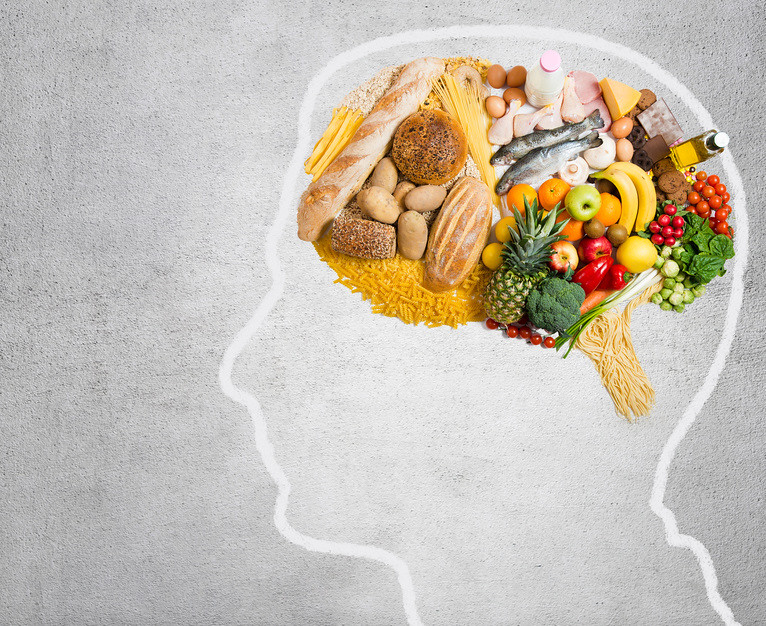
The perception of flavor is the most multisensory experience in our everyday life. It's easy enough to think of flavor as the combination of taste and odor, but a number of other sensations from the sound the food makes, to the temperature of the food to the look of the food and finally the feel of the food come together to create the sensation of flavor. With a growing number of "foodie" movements people are starting to pay more attention to flavor. Today I sit down with Izzy Frosch to talk about flavor and the brain.
flickr.com
Food on the Mind

Music is provided by http://freemusicarchive.org/ - Skyjelly - "Astral" and offered by the Creative Commons License

Saturday, April 9, 2016

Neuroscience and Law


Neuroscience has the promise to drastically alter almost every facet of our lives, but do we want it to? Neuroscience has previously contributed to the practice of law with polygraph tests and more recently our understanding of human memory and eyewitness testimony. Pushing neuroscience to its limits though, some have advocated using neuroscience technologies to peer inside the brain and understand an individuals thoughts, in particular whether they are telling the truth or lying. Today I speak with Kyle Albagli about the application of neuroscience to the field of law, in particular using brain imaging technology to tell truth from fiction.

Are they lying? - wikimedia.com


8 Reasons Why Using fMRI As A Lie Detector Is Both A Great Idea, And A Not So Great Idea

Music is provided by http://freemusicarchive.org/ - Ketsa - "Conscience" and offered by the Creative Commons License

Friday, April 8, 2016

Dance and Spatial Awareness


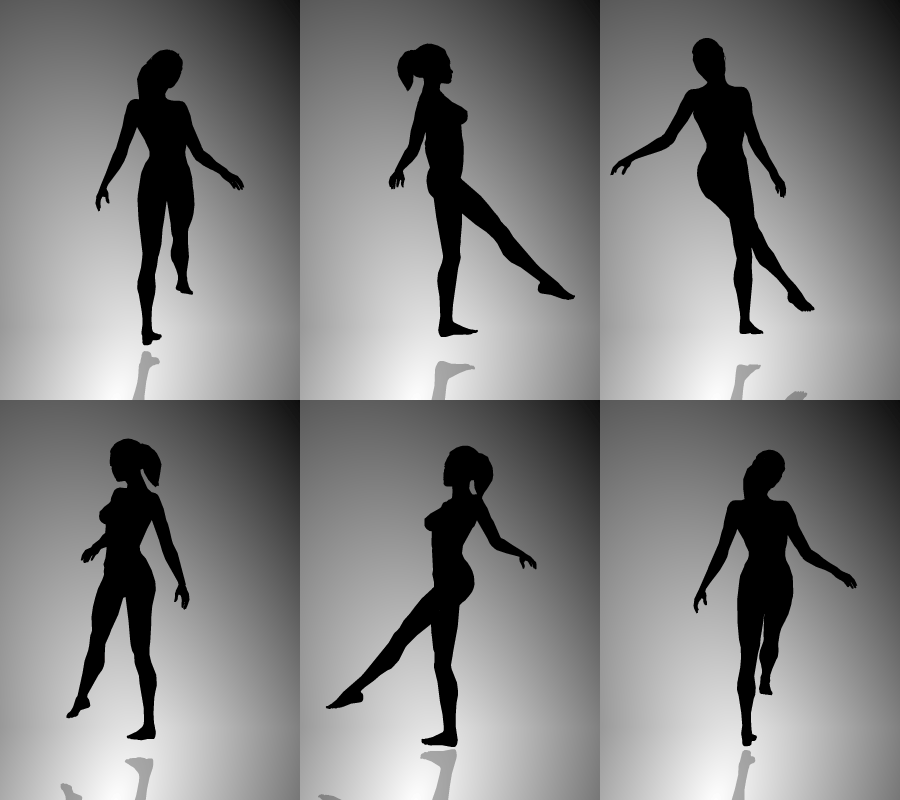
When you watch someone dancing what is happening? Are you focused on the movements, the rhythms, the music and how the movements complement the sounds you hear. Do you feel something from the dance, well it could be all of these and more. Today I speak with Jharna Jahnavi about dance perception.
wikimedia.com

Neuroscience Of Dance Perception

Music is provided by http://freemusicarchive.org/ - Circus Marcus - "La Chute" and offered by the Creative Commons License

Tuesday, March 8, 2016

Viral and Translational Neuroscience

As my classes work continues to be shared across the internet we have to ponder what we've done. What is the role of science communication? Are we making something that is both entertaining and educational or are we losing one at the cost of the other? In the few days since we started sharing our posts the videos, infographics and buzzfeed materials have been accessed and shared hundreds of times. Probably our biggest lesson is that these creations are not static, on part of our job as scientists and creators is to continue to interact with those who consume our "viral" infotainment. Below are questions that students are considering as their work continues to be shared.

Do you think that you’ve accurately translated your research for the public? Is there any nuance that was left out or glossed over? In the process of translation, what was easy for you and what was difficult for you?

Did you include citations like you would in a research article or did you link to the research or did you leave off citations completely? Do you think there will be a difference in what is shared between how much “evidence” is included?

How much writing is a part of your project? Did you try to communicate through what you wrote, the media you incorporated or a mixture of both? Do you think the message that you tried to communicate is more easily understood through the media or what you wrote?

The most viral content in neuroscience usually is about a neuromyth (e.g., are you left- or right-brained) or attempting to explain how some part of the brain contributes to an entertaining behavior (e.g., your brain when you look at Facebook). Is your topic something that people want to share? Are we limited in what people want to learn about neuroscience?

Do you think there are any copyright issues we have to be aware of when creating these projects? Falling under the umbrella of education everything should be considered fair use, however by using sites like buzzfeed, imgur, and youtube, if we created truly viral content and sent people to these sites, I would assume they would make advertising money, is that a problem?


Considering how our brain plays a role in almost everything we do, should we require a minimal understanding of neuroscience across all fields? As we’re considering in our debates on education and law, what role does neuroscience play in your topic? Did it feel like a stretch trying to find a neuroscientific explanation?
Friday, March 4, 2016

Viral Neuroscience

This semester in Cognitive Neuroscience at Haverford College we're exploring the role of neuroscience in society. On the first day of class we participated in two experiments that had previously demonstrated that neuroscience can be seductively appealing and affect our perceptions of the quality of the explanation provided. With that as a backdrop, we then explored the history of neuroscience, in particular paying attention to a few of the major revolutions in how we understand brain functioning. These two days together tell us that our current understanding of brain functioning is tenuous and likely ready for revising once we gather more information or develop new measurement techniques. This puts neuroscientists in an odd position of explaining what we know best for now and trying to do so in as understandable or approachable way as possible.

I asked the students this semester to write a term paper on a topic of their choice within cognitive neuroscience, but for a midterm checkin to make sure that they had gathered much of their background research as early as possible, I asked them to produce viral content that took their topic and made it both entertaining and informative. Their projects took the form of Buzzfeed Quizzes, Buzzfeed Listicles, Infographics and Videos and can be found gathered on our Tumblr page. Once we get back from spring break we'll discuss the impact of our work and what it meant or did for the public. In the act of translating research to be entertaining did we lose anything? Is it the responsibility of scientists to make work approachable or the public to work to try to understand science at a high-school or college level?

Help us make neuroscience go viral by sharing our work!