Showing posts with label Language. Show all posts

Friday, April 15, 2016

Language, Thought and Evolution


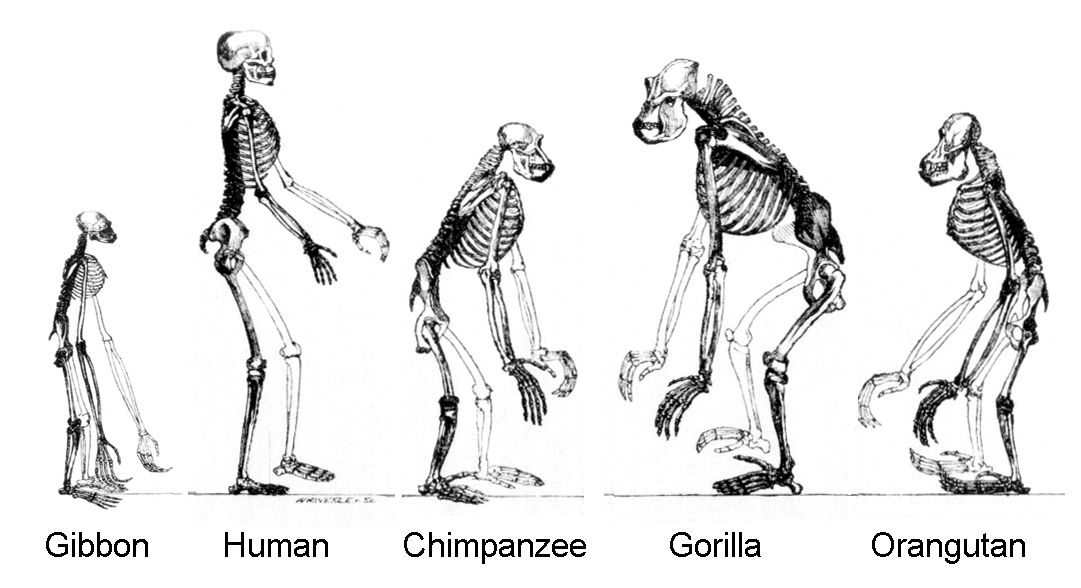
Are humans special? There's no consensus on the question of what makes us special, or whether we even are. With regard to our brains and minds, the biggest point of contention is whether our cognitive abilities differ from those of other animals "in kind," or merely in degree. In other words are we completely separate or just the smartest animals around? In the Memory, Learning and Self episode, I commented on how my two areas of research, memory and language are ripe with claims of human superiority and the moving demarcation line that separates man from beast. Today I sit down with Jay Colon to talk about humans, language thought and evolution.
wikimedia.com

What's the Difference between Humans and other Primates?

Music is provided by http://freemusicarchive.org/ - Michett - "Lift Off" and offered by the Creative Commons License

Thursday, April 14, 2016

Bark Me This

Wha, wha, wha, wha, wha, wha, Animal's name, wha, wha, wha, wha. We've all seen Charlie Brown and remember how the adult's speech makes no sense. Well, that's likely the same experience that our favorite Pooches and Kitties have when we try to speak with them, but it won't be any more. With Bark Me This, we'll teach you how to speak dog, cat, horse, pig, or whatever other animal you have so that its not them understanding you, but them understanding you. Informed by evolutionary psychology, functional imaging methodology and veterinarians, we've cracked the animal code and now you can too. For just 10 easy payments of $59.95 you can crack the animal code and bark, meow, oink and whinny your way into your animal's hearts and minds. Mention keyword EngagedBrain and receive 1 payment credit.

Disclaimer
: This is a work of satire. In the tradition of A Prairie Home Companion, this ad, among others, will form the backbone of the underwriting and sponsorship of my podcast.

Wednesday, April 13, 2016

Your Brain on Two Languages


Research in Neuroscience finds ways being bilingual can be an advantage. Somewhere around 20% of the US population is bilingual and that number is steadily increasing. Besides being able to speak more than one language, years of research has indicated that bilingualism has a number of other advantages, from understanding and appreciating cultural references, to opening up new job opportunities, and even being able to express yourself in a number of different forms or personalities. Language and thought are so closely intertwined, it raises the question of how the brains of monolingual speakers and bilingual speakers are different. Today, I speak with Daniel Bordi about the advantages of bilingualism.

flickr.com

You Won’t Believe All The Ways Knowing Two Languages Changes Your Brain!

Music is provided by http://freemusicarchive.org/ - The Silence Industry - "This Zero Hour" and offered by the Creative Commons License

Tuesday, April 12, 2016

Triolingo

You've heard of Duolingo, but have you heard of Triolingo? Its like Duolingo but better because its based on science, in particular its based on neuroscience. We only present information to your language lateralized hemisphere. We speak directly to your Heschel's Gyrus, we show words directly to your visual word form area and above all we help you learn two languages at once. Fly past bilingualism and go from monolingual to trilingual with Triolingo. Can you find anything better? ¿Puedes encontrar algo mejor? Ĉu vi povas trovi ion pli bonan? Mention keyword EngagedBrain and receive 10% off your first month fee.

Disclaimer: This is a work of satire. In the tradition of A Prairie Home Companion, this ad, among others, will form the backbone of the underwriting and sponsorship of my podcast.

Saturday, April 9, 2016

My Brain is a Metaphor: Figurative Language


Figurative language is language that uses words or expressions with a meaning that is different from the literal interpretation. Language has been one of the most fascinating topics to scientists for thousands of years, but even after all of this time, our understanding of language is still fairly minimal. When you look to an even more intricate and confusing aspect of language like figurative language, then we might as well give up. Today I sit down with Anna Aaronson to talk about figurative language processing in the brain and how confusing the findings are depending on what tasks and what methodology are used.
Empty Minded - pixbay.com


5 Things You Didn’t Know About The Cognitive Processing Of Figurative Language

Music is provided by http://freemusicarchive.org/ - The Womb - "Cool Change" and offered by the Creative Commons License

Tuesday, March 29, 2016

Bilingualism


Somewhere around 20% of the US population is bilingual and that number is steadily increasing. Besides being able to speak more than one language, years of research has indicated that bilingualism has a number of other advantages, from understanding and appreciating cultural references, to opening up new job opportunities, and even being able to express yourself in a number of different forms or personalities. Language and thought are so closely intertwined, it raises the question of how the brains of monolingual speakers and bilingual speakers are different. Today, I speak with Shantal Taveras about bilingualism, the brain and both the advantages, and generally unrecognized disadvantages of bilingualism.

Bilingualism

wikimedia.com


Music is provided by http://freemusicarchive.org/ - Dinosaur Jugnot - "Don't Look Too Much" and offered by the Creative Commons License

Wednesday, July 8, 2009

Blocked Cyclic Naming (Semantic Category Interference)

This effect reflects the finding that for naming, participants are slower when naming pictures out of a sequence of items from the same semantic category than from different categories. The naming of an object or a picture is a multi-step series of mental operations. If naming a dog, you must first recognize it and decide how you want to refer to that object. This part of the process is called conceptual preparation. You must then focus on the particular mental item ("lemma") in you mental lexicon, which is under competition of semantically related items. The operation of lexical selection is next, and you must access the selected item's form information ("phonological code"). You then syllabify the word by composing it syllables from the segments, this is the processs of "phonological encoding." For each of these syllables you access a stored motor instruction ("gestural score"). Finally you execute the gestures with overt speech as output. This is known as the core processing stages of the production of words (Levelt, Roelofs, and Meyer, 1999).

Cumulative interference for word retrieval by prior retrieval of other members of the same semantic category is similar to an inhibition being caused by these related members. An experiement by Howard et al. (2005) indicates that this inhibition effect can only occur if the spoken word production has three properties, competition, priming and semantic activation. Competition can be implemented through eithe lateral inhibition between candidates or a decision criterion. The priming of previously presented items would persist over time, even when other stimuli are inbetween the targets. The stregthening mapping can be from either semantics or lexical units. Shared activation refers to the activation through connected nodes in a semantically related network being activated. In the experiment, the investigators were able to examine the extent to which there are cumulative effects of semantic competitor priming.. The picture naming latency is slowed by an additional 30 ms for each preceding semantial

Maess, et al. (2002) attempted to distinguish the neuronal correlates of lexical access by using the phenomenon of blocked cyclic naming and MEG recording to note where in the brain, this effect took place. Results demonstrated that the left temporal region supports the processes underlying the semantic interference effect. A previous investigation had demonstrated that the time window of between 150-275 msec post picture onset was the core process of lemma selection. The time window of the current study for the activation of the left temporal region fits this same time frame.

So what does this all mean? In the present study that I am investigating, subjects were asked to name 400 pictures. They were also participants in an auditory lexical decision task in which they were to decide whether a word they heard was a real word or not. I coded these words into semantic categories. In the 400 word naming project there were 5 semantic categories, 3 large ones (animals, tools, and food)and 2 well defined but smaller ones (body parts and instruments). The reaction times of the participants were than regressed against the order of the items in the specific semantic categories. In the presence of other word variables the order of the categories only had an effect in the one group of participants. When the order of the semantic categories is looked at by itself, there is a huge effect of order, demonstrated by a 1.5 ms slowing for successive trials.

This is an interesting effect because you would think that the higher activation of the related targets would lead to a faster reaction time. However, this activation appears to be competitive and inhibitory. Perhaps it is the fact that when a word is being searched out, it has to enter the "search mechanism" with no previous activation. So if I name tiger which activates lion and then am asked to name lion, my mental lexicon has to actually go through a process of finding lion, seeing that it is activated, deactivating it and then go through the normal process.